Introduction
Few structural steel sections are as widely recognized on a construction site as the H beam. With its broad, nearly symmetrical flanges and efficient use of material, the H beam is a preferred choice for columns and heavily loaded structural members across residential, commercial, and industrial projects. H beams are valued for their ability to carry substantial axial and bending loads while keeping the structural frame compact, which matters on space-constrained urban sites across the UAE. Sydney Metal Trading Supplies H beams in a full range of sizes and grades for UAE construction and industrial projects.
What Makes an H Beam Different from Other Structural Sections
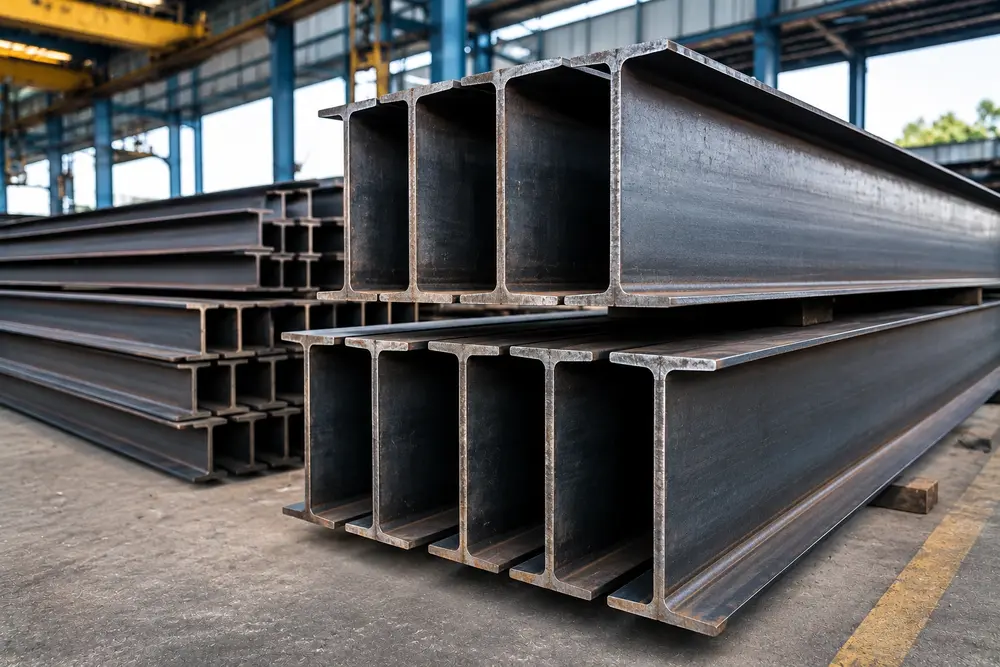
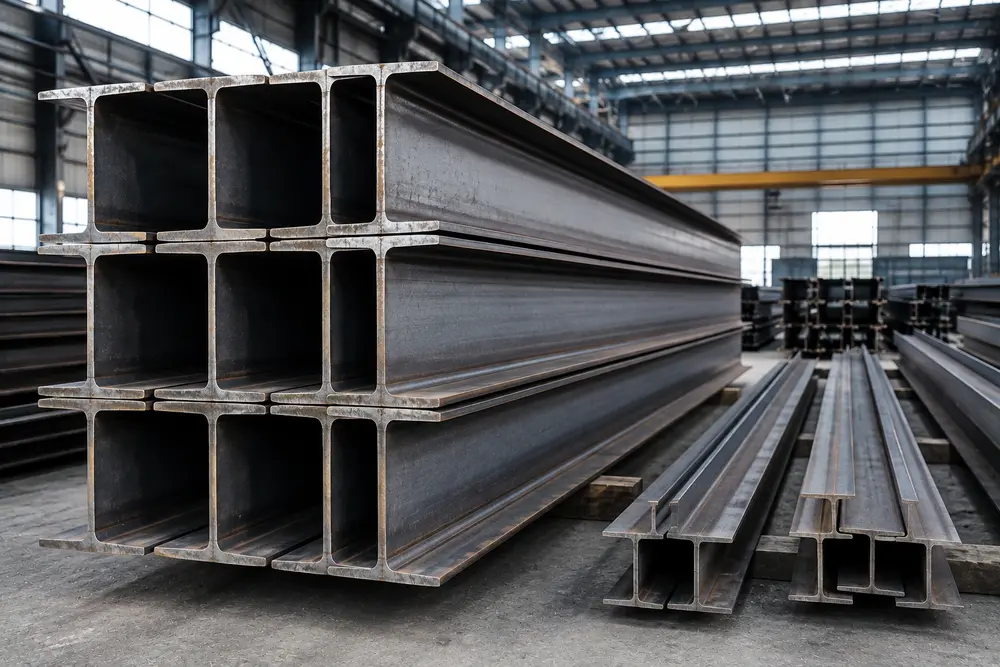
An H beam gets its name from its cross-sectional shape, which resembles the letter H when viewed end-on. Its flanges are wider and more nearly equal in width to its depth compared to a standard I beam, giving it strong resistance to bending in both directions rather than just one. This makes H beams particularly well suited to columns and members that need to resist loads from more than one direction, such as those found in multi-storey frames, industrial platforms, and heavy equipment supports.
Standard Size Ranges and How to Select the Right One
H beams are produced across a wide range of sizes to suit everything from light framing to heavy industrial structures. Selecting the right size depends on the load the member needs to carry, the span or unsupported length, and the connection detailing at each end. Engineers calculate these requirements using the section’s properties — including its cross-sectional area, moment of inertia, and section modulus — to confirm a chosen size will perform safely within the design limits of the applicable structural code. Oversizing wastes material and budget, while undersizing creates a safety risk, so this calculation step is never skipped on a properly engineered project.
Material Grades Used for H Beams
Like most structural steel products, H beams are produced in a range of grades that balance strength, weldability, and cost. S275 remains a common general-purpose grade for standard building frames, while S355 offers higher yield strength that allows engineers to specify smaller, lighter sections for the same load-carrying performance. This can reduce both material tonnage and foundation loads on multi-storey projects. Mill certificates confirming the grade and mechanical properties are essential for H beams used in certified construction projects across the UAE.
Common Applications in UAE Construction and Industry
H beams appear across a wide range of UAE construction and industrial applications:
- Primary columns in multi-storey commercial and residential buildings, where their balanced strength in both axes suits vertical load paths well.
- Heavy equipment support structures and crane runway columns in industrial facilities, where the section’s stiffness resists lateral loads from crane operation.
- Pier and support structures on bridges and infrastructure projects, where compact, high-capacity sections are required.
- Foundation and piling applications, where driven or bored H beam sections provide deep structural support in challenging ground conditions.
H Beam vs Universal Beam vs I Beam: Clearing Up the Confusion
Contractors and buyers new to structural steel sourcing often ask how H beams, universal beams, and I beam differ. The short answer is that all three are variations of the same basic I-shaped profile, but with different proportions. Universal beams tend to have narrower flanges and are optimized for bending resistance in floor and roof beam applications. H beams have wider, more nearly square flanges suited to columns and combined loading. The term I beam is sometimes used generally to cover both, though it more precisely refers to sections with tapered rather than parallel flange faces. Knowing which term, a specification is actually referring to avoids costly ordering mistakes and rework on site.
Sourcing and Fabrication Considerations
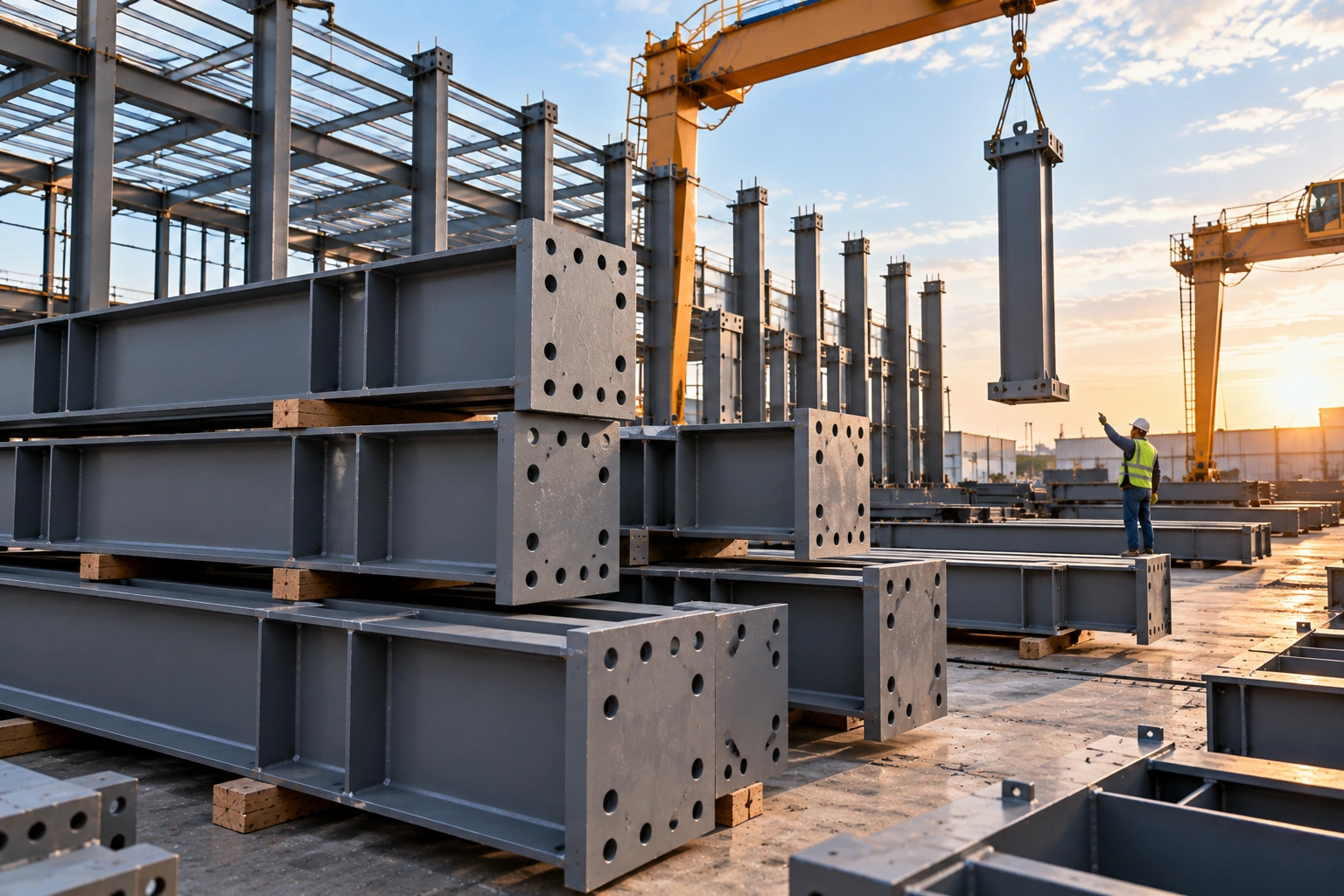
Beyond simply supplying the correct size and grade, practical sourcing considerations affect how smoothly H beams move from order to site installation. Cut-to-length services reduce on-site cutting time and waste. Pre-drilling or punching connection holes to design specifications speeds up erection. And confirming stock availability early in a project programme avoids the risk of mill lead times affecting the construction schedule. Sydney Metal Trading provides these services alongside comprehensive H beam stock for UAE projects.
related blog – Why H Beams Are So Popular in Today’s Construction
Storage and Handling on Site
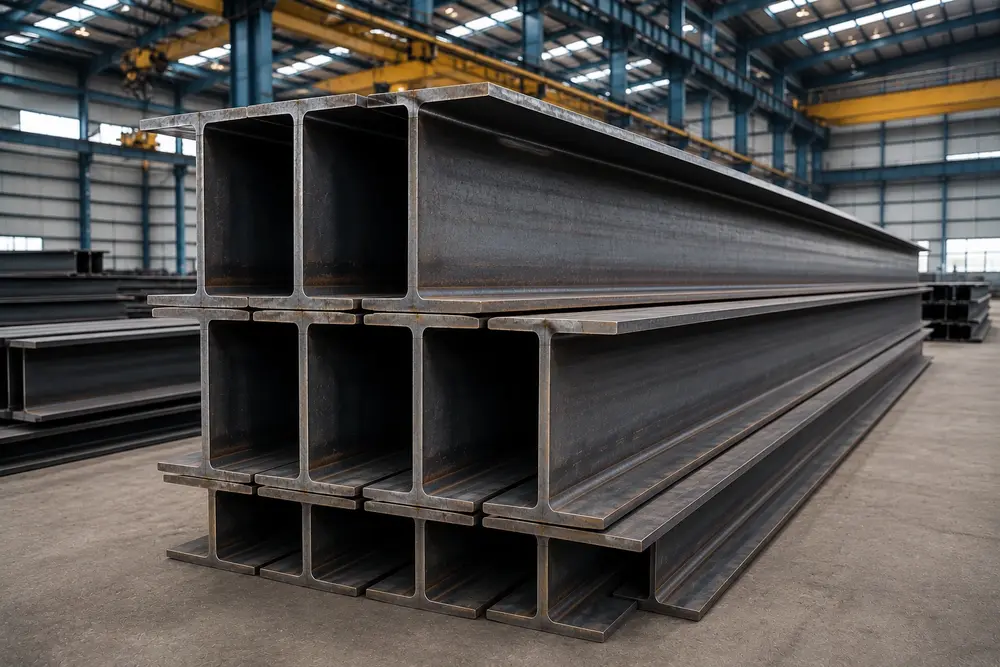
Once H beams arrive on site, how they are stored and handled affects both safety and material condition until installation. Beams should be stacked on level bearers that keep them clear of standing water and ground moisture, with enough separation between layers to allow safe lifting. Careful handling during offloading also protects flange edges and connection holes from damage that could complicate bolted or welded connections later in the construction sequence. Marking each bundle clearly with its size and grade also reduces the chance of the wrong section being lifted to the wrong part of the structure during a busy erection phase.
Conclusion
H beams remain one of the most important structural steel sections for UAE construction and industrial projects, prized for their strength, versatility, and efficient use of material. Sydney Metal Trading Supplies H beams across a full range of sizes and grades, supported by fabrication services that keep projects moving. Contact Sydney Metal Trading today for all your H beam requirements.