Introduction
Steel columns carry a building’s vertical loads down to its foundations, making them one of the most critical structural elements in any steel-framed project. Choosing the wrong column section can mean an overloaded structure at worst, or an unnecessarily expensive and heavy frame at best, which is why selecting the right steel columns is never a decision left to guesswork. UAE construction projects use several different column types depending on the building height, the loads involved, and the architectural constraints of the design. Sydney Metal Trading supplies steel columns across the section types and sizes that UAE contractors and structural engineers specify most often.
Common Column Section Types
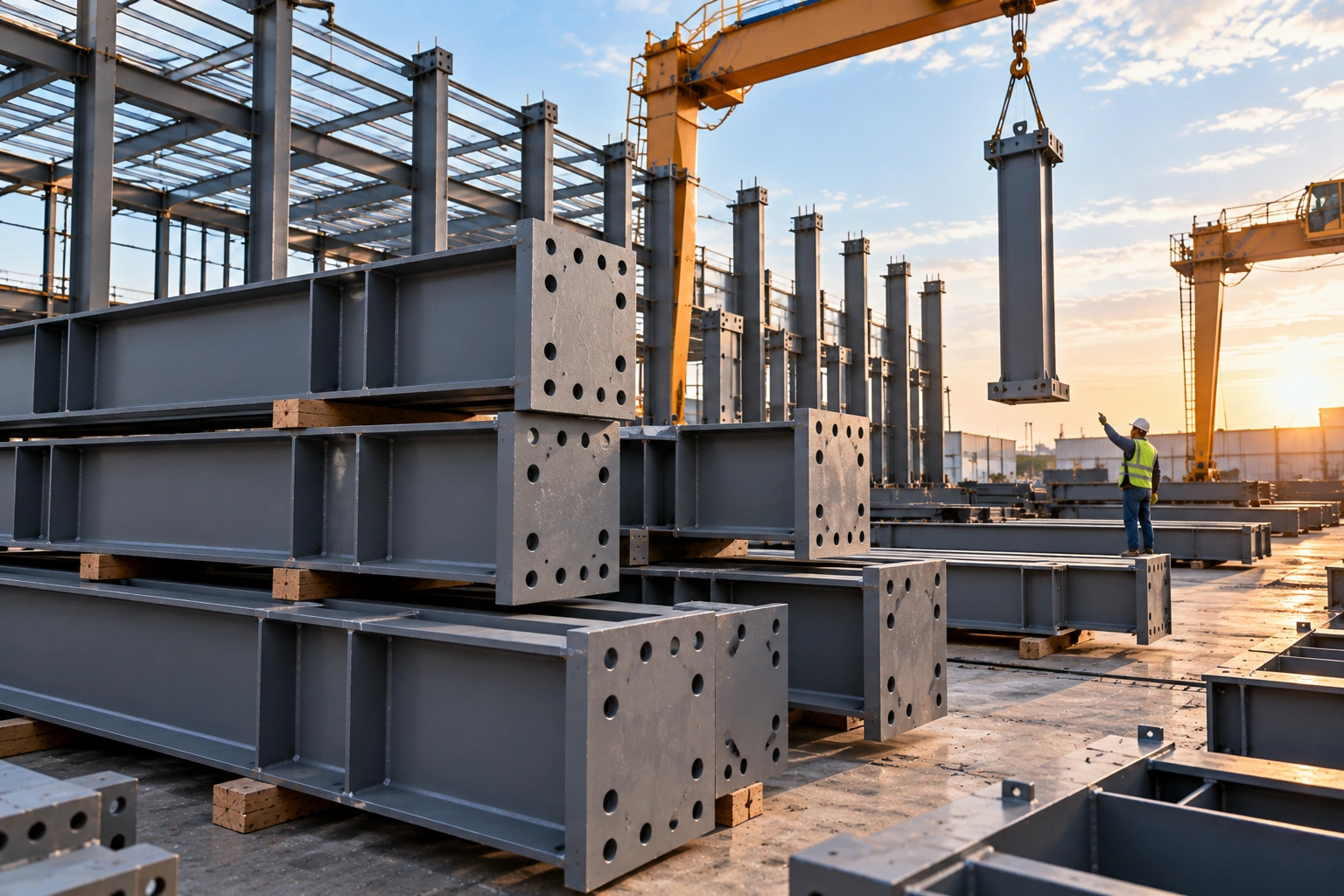
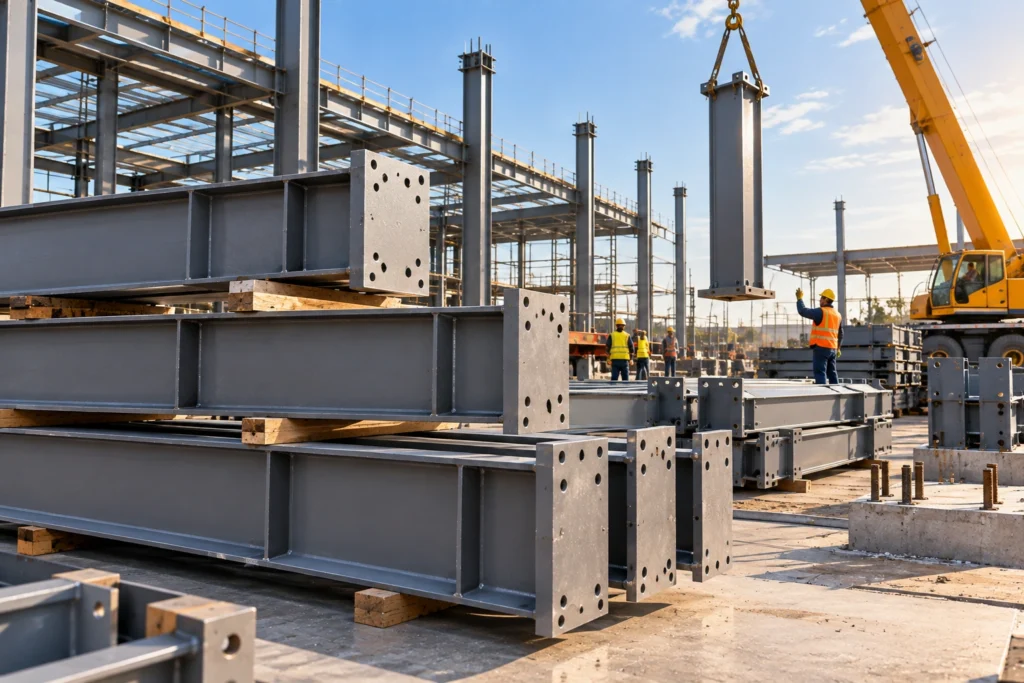
Structural engineers choose from several section shapes when specifying steel columns. Universal Columns have a near-square profile that resists buckling equally in both directions, making them a popular default choice for multi-storey buildings. H beams offer a similar squared shape with wide flanges suited to heavy axial loads. Circular and rectangular hollow sections provide a clean architectural finish and efficient torsional stiffness, often chosen where the column will be visible in the finished building. Composite columns, which combine a steel section with a concrete casing or infill, are sometimes specified where fire resistance or additional stiffness is required without significantly increasing the column footprint. Each shape carries load differently, so the right choice depends on more than just the number on a structural drawing.
Steel Columns vs Steel Beams: Why the Distinction Matters
Columns and beams both use similar rolled steel sections, but the way they carry load is completely different, and confusing the two during early planning can lead to the wrong section being ordered. Beams resist bending as load pushes down across a span, so their strength comes mainly from depth. Columns resist compression as load pushes straight down their length, so their strength depends heavily on how slender or stocky the section is. A section that performs well as a beam is not automatically a good column, and vice versa, which is why structural drawings always specify columns and beams separately rather than treating steel sections as interchangeable.
How Load-Bearing Capacity Is Determined
A column’s load-bearing capacity depends on its cross-sectional area, its shape, its steel grade, and critically, its unsupported length. A short, stocky column can carry far more load relative to its size than a slender one of the same section, because slender columns are more prone to buckling under compression. Structural engineers calculate this capacity using the section’s properties together with the applicable design code, confirming that a chosen size performs safely within both strength and deflection limits before it is ever ordered.
Grade Selection for Steel Columns
Like other structural steel products, columns are produced in a range of grades. S275 suits standard building frames with moderate loads. S355 offers higher yield strength, allowing engineers to specify a smaller, lighter column for the same load, which can reduce both material cost and foundation size on taller structures. Mill certificates confirming the grade and mechanical properties of each column are essential documentation for certified UAE construction projects.
Matching Column Type to Project Requirements
No two projects use steel columns the same way. A warehouse with a single storey and light roof loads may need only modest column sizes, while a multi-storey office tower needs deep, heavy sections capable of carrying several floors of load down to the foundation. Coastal or exposed sites often call for galvanized or coated columns rather than plain black steel, since corrosion protection extends the structure’s service life significantly in humid, salt-laden air. Fire rating requirements can also influence the choice of section and any protective casing or coating specified, particularly for columns in enclosed commercial buildings where fire engineering standards apply.
A common mistake on smaller projects is ordering column sections based on a similar past project rather than a fresh calculation for the current loads and spans. Even a modest change in floor height, roof loading, or bay spacing can change the required section size, so treating every project’s column schedule as its own calculation, rather than a copy of the last one, avoids both under-sizing and unnecessary over-spending on steel that is heavier than the design actually needs.
Fabrication and Site-Ready Supply
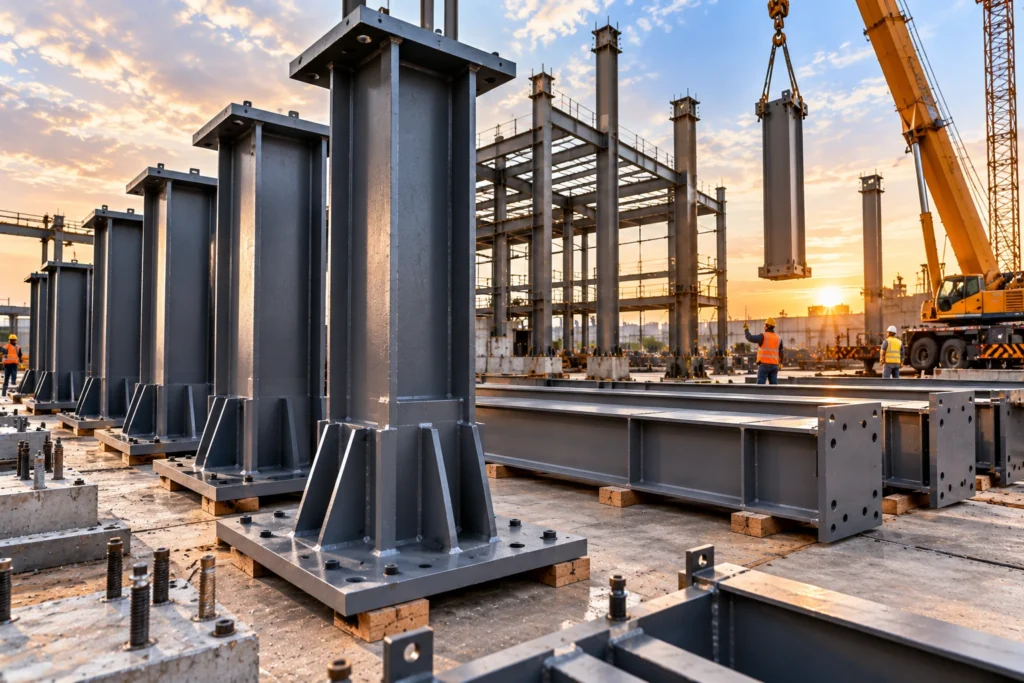
Steel columns rarely arrive on site as plain, uncut lengths. Base plates need welding, connection holes need drilling or punching, and columns often need cutting to precise lengths before erection begins. Sydney Metal Trading provides these fabrication services alongside standard column stock, so contractors receive material that is ready for rapid installation rather than requiring further workshop preparation once it reaches the project.
Related blog post – How to Choose the Right Steel Columns for Your Construction Project
Stock Availability and Project Planning
Construction programmes rarely allow for delays, and steel columns are almost always on the critical path for a project’s frame erection. A supplier with genuine stock depth across common sizes and grades lets contractors move from order to delivery quickly, without waiting on mill lead times that can stretch during busy construction periods. Sydney Metal Trading maintains comprehensive stock of steel columns across the UAE market, supporting project schedules from early planning through to final erection.
Conclusion
Steel columns are the backbone of every steel-framed structure, and choosing the right section, grade, and finish protects both a project’s budget and its long-term performance. Sydney Metal Trading supplies steel columns across the sizes and grades that UAE construction and industrial projects need, backed by fabrication support and reliable stock availability. Contact Sydney Metal Trading today to discuss your steel column requirements.